Keeping track of ammo with a spreadsheet sounds fine at first. Then real life happens. You buy a few boxes, shoot part of one at the range, switch calibers, forget what brand performed best, and suddenly the spreadsheet is wrong.
If you own more than one firearm or shoot regularly, ammo inventory needs to be easy to update after every range trip. Otherwise, you are just guessing how much ammo you have, what you used, and what you need to buy next.
That is exactly why Vaultynex was built. Instead of fighting with rows, columns, and half-updated notes, you can track ammo, range sessions, rounds fired, firearm setups, and shooting results in one place.
Vaultynex helps shooters stop guessing and start tracking what actually works.
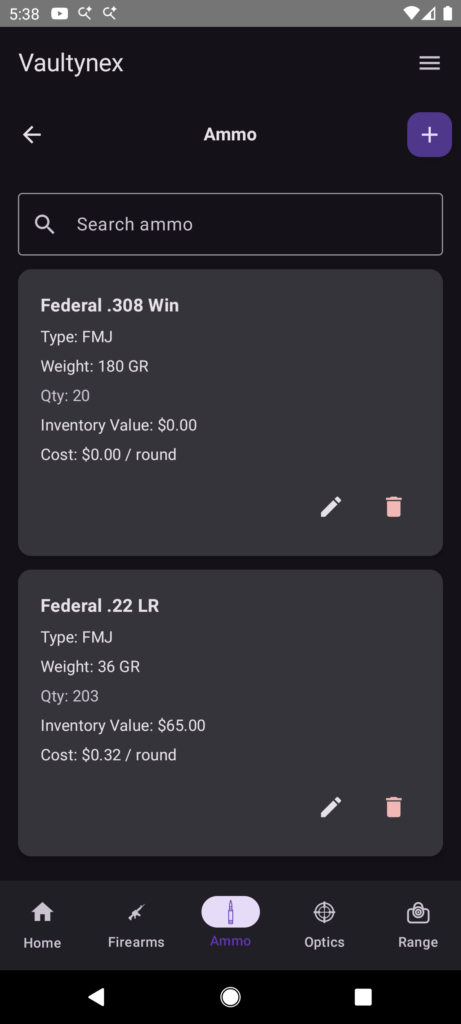
Why Spreadsheets Fall Apart for Ammo Tracking
A spreadsheet can work if you only own one firearm, shoot rarely, and always remember to update it. But for most shooters, that falls apart quickly.
The biggest problem is that spreadsheets are passive. They do not fit naturally into your range routine. You have to remember to open the file, find the right row, update the right quantity, subtract what you fired, and maybe add notes about performance.
That is too much friction. And when tracking feels annoying, people stop doing it.
Common spreadsheet problems include:
- Forgetting to subtract rounds after a range session
- Mixing up calibers, brands, or bullet types
- Not knowing which ammo performed best in each firearm
- Not linking ammo use to actual range results
- Having no easy way to review past shooting data
The real issue is not that spreadsheets are bad. The issue is that ammo tracking should be connected to how you actually shoot.
What You Should Track in an Ammo Inventory
A useful ammo inventory should tell you more than “I have some boxes left.” It should help you understand what you own, what you used, and what performs well.
At minimum, track:
- Caliber
- Brand
- Bullet weight
- Ammo type
- Quantity on hand
- Rounds fired
- Firearm used
- Range session notes
- Performance notes
This is where an app beats a spreadsheet. You are not just storing inventory. You are building a shooting history.
For example, if one .22 LR load groups better in your Ruger 10/22 than another, that matters. If one ammo brand creates more cleaning problems, that matters too. If one setup performs better at 50 yards than 100 yards, you want that information saved somewhere useful.
Spreadsheet vs Vaultynex
| Tracking Method | Best For | Weakness |
|---|---|---|
| Spreadsheet | Basic inventory lists | Easy to forget, hard to connect to range results |
| Notebook | Simple handwritten notes | Hard to search and easy to lose details |
| Vaultynex | Ammo, firearms, range sessions, and shooting progress | Requires building the habit of logging sessions |
A spreadsheet tells you what you typed in. Vaultynex helps you connect your ammo to what happened at the range.
How Vaultynex Helps You Track Ammo Without the Mess
Vaultynex is designed for shooters who want a cleaner way to track their range history. Ammo inventory is only one part of the system.
With Vaultynex, you can track your shooting information around real range sessions instead of scattered notes. That means your ammo use, firearm setup, target photos, group sizes, and session notes can all work together.
Vaultynex can help you track:
- Ammo inventory by caliber and type
- Rounds fired through each firearm
- Range sessions over time
- Target photos and group size progress
- Firearm setups and performance notes
- Maintenance based on actual use
If you want a deeper breakdown of ammo-specific tracking, visit the ammo inventory app page.
Ammo Tracking Works Best When It Connects to Range Sessions
The mistake many shooters make is tracking ammo separately from shooting performance.
That gives you inventory data, but not useful range data.
For example, knowing you fired 100 rounds is helpful. But knowing which firearm, which ammo, what distance, what group size, and what target result is much better.
That is where a range session log becomes valuable.
Instead of only asking, “How much ammo do I have left?” you can start answering better questions:
- Which ammo grouped best?
- Which firearm has the most rounds through it?
- When should I clean or inspect this firearm?
- Which setup gave me the best results?
- Am I actually improving over time?
For more on this, read how to track rounds fired through each firearm and why you should keep a range session log.
Do You Still Need a Spreadsheet?
If you like spreadsheets, you can still use one. But it should not be your main system if you are serious about tracking range progress.
A spreadsheet is fine for a static ammo count. It is weak for tracking real shooting history.
The better setup is simple:
- Use Vaultynex for range sessions, ammo use, firearms, and results
- Use your notes to record what worked and what failed
- Review your history before buying more ammo or changing setups
That is how tracking becomes useful instead of just another chore.
Download Vaultynex on Google Play
If you are tired of guessing what ammo you have, what you used, and what actually worked at the range, Vaultynex gives you a cleaner system.
Track your ammo, range sessions, firearms, target photos, group sizes, and shooting progress from one place.
Download Vaultynex on Google Play
Related Vaultynex Features
- Ammo Inventory App
- Range Session Tracking App
- Firearm Round Count Tracker App
- Group Size Tracking App
- Firearm Maintenance Tracker App
FAQ
What is the easiest way to track ammo inventory?
The easiest way is to use a system that connects ammo inventory to your range sessions. A spreadsheet can track quantity, but an app like Vaultynex helps connect ammo use to firearms, rounds fired, target results, and shooting progress.
Is a spreadsheet good enough for ammo tracking?
A spreadsheet is good enough for a basic ammo list, but it becomes weak when you want to track rounds fired, firearm performance, range notes, or group size results. If you shoot regularly, a dedicated tracking app is cleaner.
What ammo details should I track?
You should track caliber, brand, bullet weight, ammo type, quantity, rounds fired, firearm used, range session notes, and performance results.
Why track ammo used during range sessions?
Tracking ammo during range sessions helps you understand what works best in each firearm. It also helps you monitor round counts, plan maintenance, and avoid guessing when buying more ammo.
Can Vaultynex replace my ammo spreadsheet?
Yes. Vaultynex is designed to replace scattered notes and basic spreadsheets by helping shooters track ammo, firearms, range sessions, target photos, group sizes, and shooting progress in one place.