Cleaning your firearm based only on memory is a weak system. If you shoot regularly, switch between firearms, or test different ammo, you need a better way to know when cleaning or inspection makes sense.
A good rule of thumb is simple: track your rounds fired, track your range sessions, and use that history to decide when your firearm needs attention.
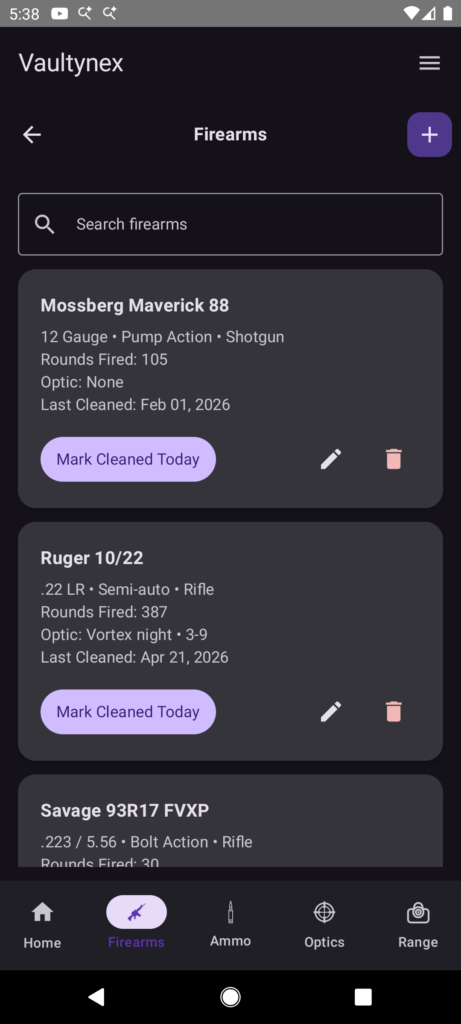
Vaultynex helps shooters track rounds fired, range sessions, ammo use, firearm setups, target photos, group sizes, maintenance notes, and shooting progress in one place.
Download Vaultynex on Google Play
There Is No Perfect Cleaning Number
There is no single round count that applies to every firearm, every ammo type, and every shooter.
Some shooters clean after every range trip. Others clean after a few hundred rounds. Some firearms tolerate longer intervals better than others. Ammo type, shooting conditions, firearm design, suppressor use, and personal preference all matter.
The problem is not that shooters clean too often or not often enough. The bigger problem is that most shooters do not track enough information to make a smart decision.
If you cannot answer how many rounds you fired, what ammo you used, and when you last cleaned the firearm, then you are guessing.
A Practical Firearm Cleaning Schedule by Round Count
These are practical starting points, not hard rules. Always follow your firearm manufacturer’s instructions and use common sense if the firearm is dirty, unreliable, exposed to moisture, or showing performance issues.
- After every range trip: Basic wipe-down, visual inspection, and note any issues.
- Every 100–300 rounds: Common cleaning interval for many firearms used regularly.
- Every 300–500 rounds: Deeper cleaning may make sense depending on ammo, firearm type, and performance.
- After harsh conditions: Clean sooner after rain, dirt, heavy fouling, or moisture exposure.
- When performance changes: Clean or inspect if accuracy drops, function changes, or reliability issues appear.
The point is not to obsess over a magic number. The point is to track enough information that your cleaning schedule is based on use instead of memory.
Why Round Count Tracking Matters for Cleaning
Round count tracking gives you a clearer picture of how much use each firearm has seen.
Without round count tracking, you might clean too late, clean too often, or forget which firearm has been used the most. That is especially easy if you own more than one firearm or shoot different calibers.
Tracking rounds fired helps you understand:
- How many rounds have gone through each firearm
- Which firearms are used most often
- When cleaning or inspection may be due
- Whether certain ammo creates more fouling
- When performance changes started
Vaultynex makes this easier by helping shooters connect round counts to range sessions, ammo use, and firearm history.
For more detail, visit the firearm round count tracker app page.
Cleaning After Every Range Trip
Cleaning after every range trip is not a bad habit, especially if you enjoy it or want your firearms stored clean.
At minimum, every range trip should include a quick inspection. Look for unusual wear, loose parts, heavy fouling, rust, moisture, or anything that changed during the session.
Even if you do not do a full cleaning every time, logging the session matters. Record the firearm, ammo, rounds fired, and any notes about performance.
That record becomes useful later when you are trying to understand why a firearm started behaving differently.
Ammo Type Can Change Your Cleaning Needs
Not all ammo behaves the same.
Some ammo burns cleaner. Some creates more fouling. Some may produce different results in different firearms. If you do not track ammo use, you will have a hard time connecting cleaning needs to what you actually shot.
That is why ammo tracking and round count tracking belong together.
If one ammo brand seems to leave more fouling or your groups open up after using a certain load, that is useful information. But you only get that information if you track it.
Learn more on the ammo inventory app page and read how to track ammo inventory without a spreadsheet.
Range Session Logs Make Maintenance Easier
A range session log is one of the best tools for firearm maintenance.
Instead of trying to remember what happened, you can look back at your actual shooting history. You can see what firearm was used, what ammo was fired, how many rounds were shot, and whether there were any accuracy or reliability notes.
That turns maintenance into a decision based on real history.
For example, if a firearm has seen several range trips without cleaning and your latest groups were worse than normal, your range log gives you something to investigate.
For full session tracking, visit the range session tracking app page or read why you should keep a range session log.
Track Cleaning and Maintenance Notes
Cleaning is only one part of firearm maintenance.
You may also want to track inspections, lubrication, optic checks, setup changes, part replacements, and performance notes. If you make changes but do not record them, you lose useful history.
Useful maintenance notes may include:
- Date cleaned
- Round count at cleaning
- Ammo used since last cleaning
- Any reliability issues
- Accuracy or group size changes
- Parts inspected or replaced
- Optic or setup changes
Vaultynex helps shooters keep these details connected to firearm history instead of scattered across memory, photos, and random notes.
For more, visit the firearm maintenance tracker app page.
Signs You Should Clean or Inspect Sooner
Round count is helpful, but it should not be the only thing you use.
Clean or inspect sooner if you notice:
- Reliability issues
- Accuracy changes
- Heavy visible fouling
- Moisture or rust risk
- Unusual wear
- Loose parts or setup changes
- Different feel during operation
A tracker does not replace common sense. It gives you a better record so you can make smarter decisions.
Stop Cleaning Based on Guesswork
If you shoot once a year, memory might be enough. If you shoot regularly, memory is trash.
You need a record of what happened. You need to know what firearm you used, how many rounds you fired, what ammo you shot, and whether the firearm was cleaned or inspected afterward.
That is how you move from guessing to actually understanding your equipment.
Vaultynex helps shooters build that history through range sessions, round counts, ammo tracking, maintenance notes, target photos, group sizes, and firearm setups.
Download Vaultynex for Firearm Maintenance Tracking
If you want to clean and maintain firearms based on actual use, Vaultynex gives you a practical way to track the details that matter.
Track rounds fired, range sessions, ammo use, firearm maintenance, target photos, group sizes, and shooting progress in one place.
Download Vaultynex on Google Play
Related Vaultynex Features
- Firearm Round Count Tracker App
- Firearm Maintenance Tracker App
- Range Session Tracking App
- Ammo Inventory App
- Group Size Tracking App
Helpful Vaultynex Guides
- How to Track Rounds Fired Through Each Firearm
- How to Track Ammo Inventory Without a Spreadsheet
- Why You Should Keep a Range Session Log
- What to Record After Every Range Trip
FAQ
How often should you clean a firearm?
There is no single answer for every firearm. Many shooters do a basic inspection after every range trip and clean based on round count, ammo type, conditions, and performance changes.
Should I clean my firearm after every range trip?
A quick inspection after every range trip is smart. A full cleaning after every trip depends on the firearm, ammo, conditions, and how many rounds were fired.
How many rounds before cleaning a firearm?
Many shooters use rough intervals such as every 100–300 rounds for routine cleaning, but the right number depends on firearm type, ammo, use conditions, and manufacturer guidance.
Why should I track rounds fired?
Tracking rounds fired helps you understand firearm use over time. It can help with cleaning schedules, inspections, ammo tracking, performance review, and maintenance history.
Can Vaultynex help track firearm cleaning?
Yes. Vaultynex helps shooters track range sessions, rounds fired, ammo use, firearm notes, maintenance history, target photos, group sizes, and shooting progress.